
What used to be a quiet piece of the operation — grab a chassis, grab a box, go — has become one of the top three reasons drayage moves slip.
Why the Shortage Is Sticky
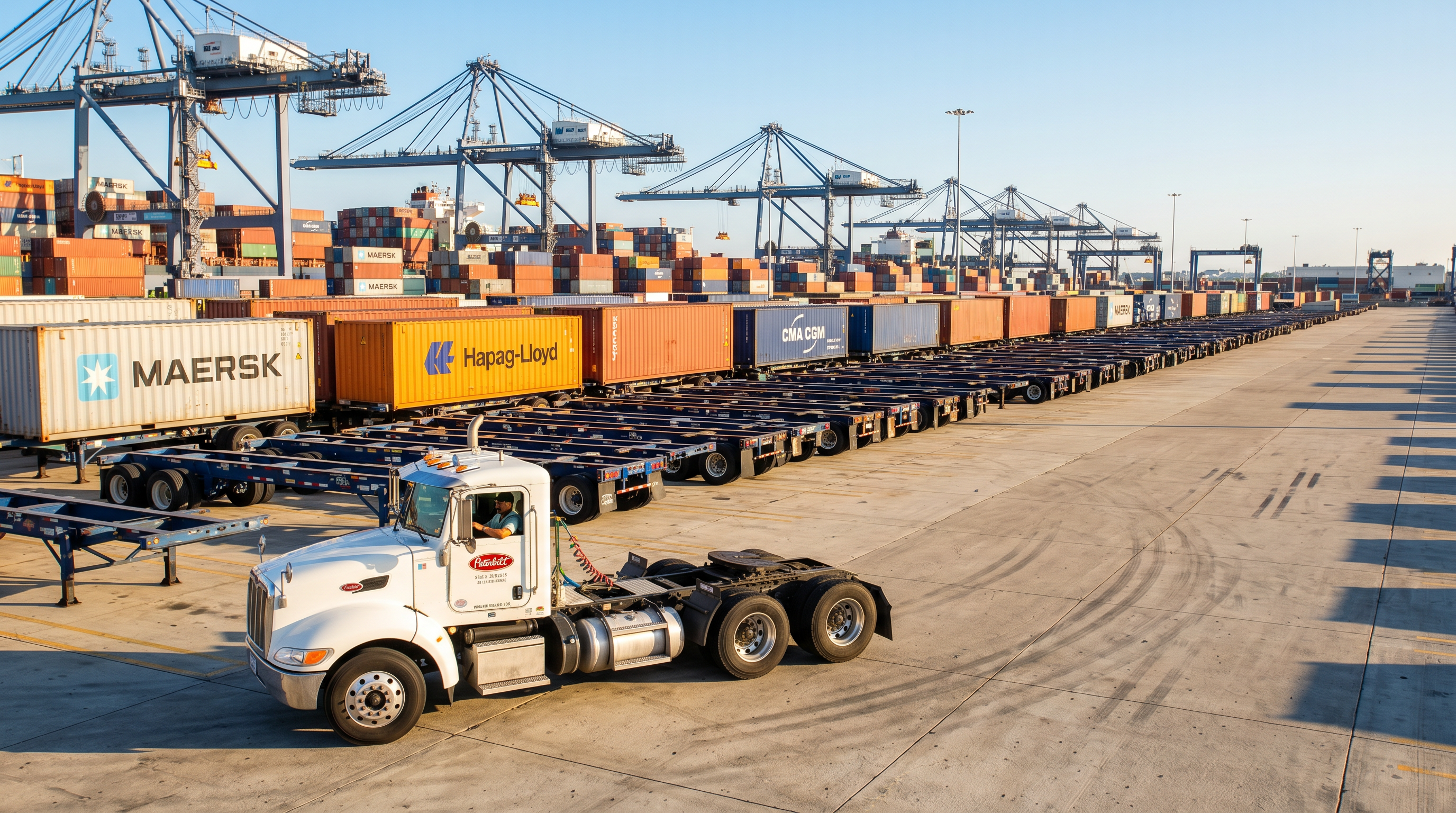
Chassis supply has been under pressure from several directions at once. The U.S. chassis fleet is aging and replacement orders have not kept pace with retirements. New chassis cost significantly more than they did in 2019, and financing is more expensive. Pool ownership has consolidated in ways that create short-term friction on every transition. Import demand remains volatile, making it hard for pool operators to align supply with demand. And port-specific maintenance backlogs reduce effective supply even when fleet totals look healthy.
None of this resolves overnight. Plan for tight chassis conditions as your 2026 baseline, not as an occasional disruption.
How the Shortage Shows Up in Your Supply Chain
A chassis shortage rarely shows up as a visible "no chassis" message. It shows up as longer gate times, split moves (container at the terminal, chassis somewhere else), missed appointments, wrong-configuration substitutions, higher per-container cost from split-chassis and repositioning fees, and increased demurrage exposure when pulls slip past the free-time window. You see the symptom — a delayed delivery, a surprise line item, a missed cutoff — without seeing the chassis issue underneath. Which is why your carrier's chassis strategy matters so much.
Why Asset-Based Carriers Handle It Better
The shortage exposes the gap between asset-based carriers and broker-led models more clearly than almost any other operational pressure.
**Asset-based carriers own levers.** When a carrier owns its own tractors and maintains formal relationships with chassis providers, it has options a broker does not: a blended fleet of owned and pool chassis, preferred access agreements, direct visibility into which chassis are roadable right now, the ability to pre-position chassis near the terminal, and authority to adjust dispatch in real time when an issue arises.
**Brokered models borrow capacity.** A broker does not own equipment. When the pool is tight, a broker finds whichever subcontractor can secure a chassis that day — often at a premium, often with limited visibility. Shippers working with brokers feel the shortage first and pay for it in cost, delay, or both.
This is not an attack on brokers. Brokerage has legitimate roles in non-port freight. For drayage specifically, in a chassis-constrained market, asset-based is almost always the more resilient model.
What Good Carriers Are Doing Differently in 2026
A few operational disciplines separate carriers coping well from carriers getting hit hard:
- •Early booking visibility — capturing your booking when you have it, not when the container lands, so dispatch can line up chassis, driver, and appointment together.
- •Pre-pull strategy — when a container's last free day is approaching and pool supply is thin, a carrier with yard space can pre-pull to protect against demurrage.
- •Dual-pool access — carriers with access to multiple pools have more flexibility when one runs short.
- •Chassis condition tracking — not every "available" chassis is roadable. Good carriers route drivers to known-good units, reducing gate-rejection cycles.
- •Transparent communication — when a chassis issue will affect a pickup, the carrier should tell you early.
What You Can Do to Reduce Exposure
Chassis availability is mostly a carrier responsibility, but you can reduce your own exposure meaningfully:
- •Forecast volume monthly. Even rough forecasts help your carrier plan chassis and drivers.
- •Avoid tight delivery windows when possible. A 48-hour window costs less than a four-hour hard appointment.
- •Consolidate onto fewer carriers. Carriers protect their best customers first when capacity is scarce.
- •Price split-chassis fees into your rate upfront rather than being surprised later.
- •Pay attention to last-free-day dates. A 24-hour warning lets your carrier pre-pull; a 4-hour warning gives you demurrage.
- •Consider transloading or warehousing and distribution near the port to absorb timing risk.
Red Flags When Evaluating Carriers
If a carrier cannot clearly answer "do you own chassis or rely entirely on pool," "what happens when the pool is dry," "who gets protected first when capacity is scarce," "what is your split-chassis fee and when does it apply," and "how many chassis-driven exceptions did you have last month," their chassis strategy is probably thinner than their marketing suggests.
A More Resilient Way to Move Containers
The carriers that own equipment, employ drivers, and operate in the port every day are quietly keeping supply chains intact while the pool fluctuates.
New Roads Logistics is an asset-based PortMiami drayage carrier with owned power units, TWIC-credentialed W-2 drivers, blended chassis access, and a bilingual dispatch floor minutes from the terminal gate. We are built for the conditions the industry is navigating right now.
**Want to see how we would protect your containers through the shortage?** Call **(305) 733-1650** or [request a free quote](https://portmiamidrayage.com/contact). We will walk you through our chassis strategy and how we would run your lane.